Your Servers Aren’t Salespeople. And That’s Costing Operators More Than They Think.
Most operators have had the same pre-shift conversation at some point.
“Push appetizers.” “Suggest premium cocktails.” “Sell desserts.”
The assumption is simple: If servers upsell more, average check increases. If average check increases, margins improve.
In theory, that makes sense.
In practice, it rarely works consistently.
Not because the team doesn’t care. Not because they aren’t capable.
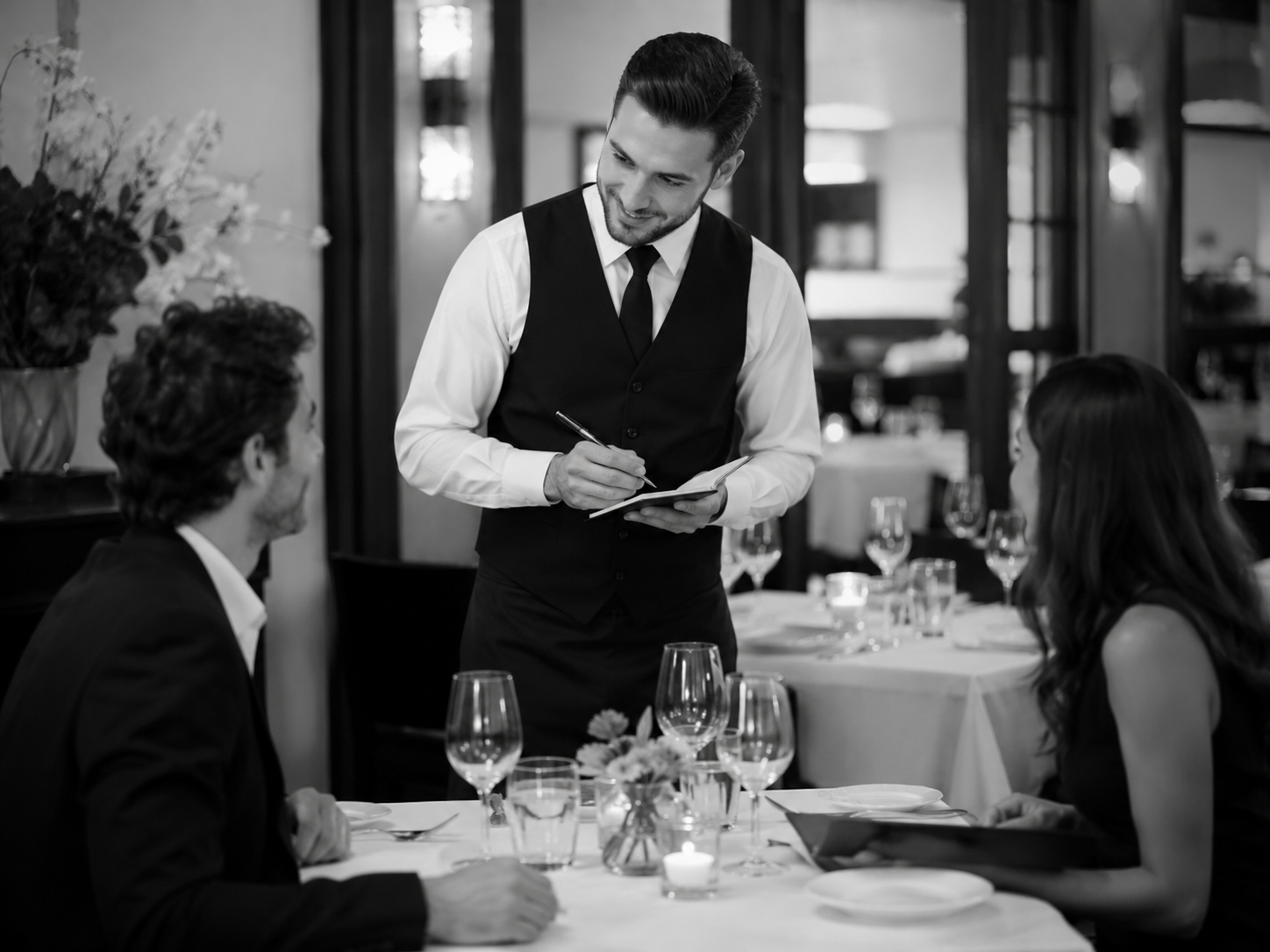
Because most servers were never hired to be salespeople in the first place.
They were hired to create a good guest experience. To manage tables, solve problems quickly, communicate with the kitchen, and keep service moving under pressure.
Selling is an entirely different skill set.
Yet many restaurants continue trying to improve profitability through reminders, meetings, and repeated coaching around upselling behaviour.
The problem is that behaviour-based systems are inconsistent by nature.
Some servers do it naturally. Some forget. Some avoid it entirely during busy shifts.
Which means the outcome becomes unpredictable.
Many operators are surprised by how much opportunity exists inside their current operation once the right systems are put in place.
The financial impact of average check is much larger than most operators realize.
Consider two restaurants running the exact same labour hours and serving the exact same number of guests.
Restaurant A averages $25 per guest. Restaurant B averages $35 per guest.
At 100 guests, Restaurant A generates $2,500 in revenue while Restaurant B generates $3,500.
If both restaurants spend $750 on labour that day, Restaurant A operates at a 30% labour cost while Restaurant B operates at approximately 21%.
Same labour dollars. Same guest count. Very different result.
That gap is not created by “working harder.”
It is usually created through menu engineering, pricing strategy, beverage attachment systems, and operational design.
The strongest operators understand that improving spend per guest has a direct impact on labour efficiency without reducing service levels or overworking teams.
That is where the math starts to change.
Benchmark Sixty works with operators across North America to identify the operational systems that are quietly compressing margin.
The highest-performing restaurants rarely depend on staff remembering to “sell more.”
Instead, they engineer environments where higher spend happens naturally.
Menus are structured intentionally. Pricing is positioned strategically. Third-party delivery is optimized properly. Guest decisions are guided through design rather than pressure.
That shift matters because operational performance becomes more stable when systems do the heavy lifting instead of relying on perfect employee behaviour every shift.
Most restaurants already have the traffic they need to improve profitability.
The challenge is that many are still leaking margin through operational inefficiencies they no longer notice because those inefficiencies have become normal.
That’s exactly what the Restaurant Operations Survey is designed to uncover.
If you are actively looking for ways to improve profitability, reduce labour pressure, or optimize operational performance inside your restaurant, CLICK HERE to complete the Restaurant Operations Survey.
For many operators, the opportunity is not generating more revenue.
It is keeping more of the revenue they are already producing.